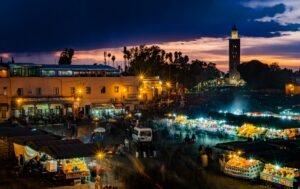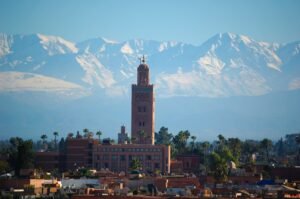
Planning your life as a digital nomad in Morocco is one of the best decisions you can make in 2026. With a cost of living up to 70% lower than Western Europe, fiber internet reaching speeds of 200 Mbps in major cities, breathtaking landscapes, and a strategic location just 14km from Spain, Morocco offers remote workers an unbeatable combination of productivity, culture, and lifestyle.
This complete digital nomad Morocco guide covers everything you need: the best cities for remote work, top coworking spaces, visa requirements, monthly costs, and practical tips to make your move smooth and successful. Whether you’re a freelancer chasing inspiration, an entrepreneur building a startup, or a full-time remote employee — Morocco has a city that fits your working style perfectly.
Table of Contents
Why Morocco for Digital Nomads?
Morocco has all the ingredients that make a great digital nomad destination. Here’s why thousands of remote workers are choosing Morocco every year:
- Affordable cost of living: Budget comfortably on $600–$1,500/month including accommodation, food, and transport
- Strategic location: Just 14km from Spain — easy access to Europe for visa runs or client meetings
- Improving internet: Fiber internet widely available in major cities (100–200 Mbps)
- Rich culture: Incredible food, architecture, nature, and a welcoming local population
- Year-round sunshine: Mild climate in coastal cities — perfect for outdoor working sessions
- Growing nomad community: Active expat and nomad communities in Marrakech, Casablanca, and Taghazout
- Safe destination: Morocco ranks well on safety for solo travelers and expats
Morocco Digital Nomad Visa & Entry Requirements
As of 2026, Morocco does not yet have an official digital nomad visa, but the good news is that citizens of many countries can enter visa-free and stay for up to 90 days — more than enough for a long working stay.
Who Can Enter Morocco Visa-Free?
- USA, Canada, UK, EU countries: Visa-free for up to 90 days
- Australia, New Zealand: Visa-free for up to 90 days
- Most African Union countries: Visa-free entry
- Other countries: Check with your local Moroccan embassy
💡 Insider Tip: After 90 days, many digital nomads do a quick “visa run” to Spain or the Canary Islands for a weekend, then re-enter Morocco for a fresh 90-day stamp. Always verify current entry rules before travel.
Best Cities in Morocco for Digital Nomads
Here are the top cities for remote work in Morocco, each with its own unique character and advantages:
Marrakech — Best for Culture & Community
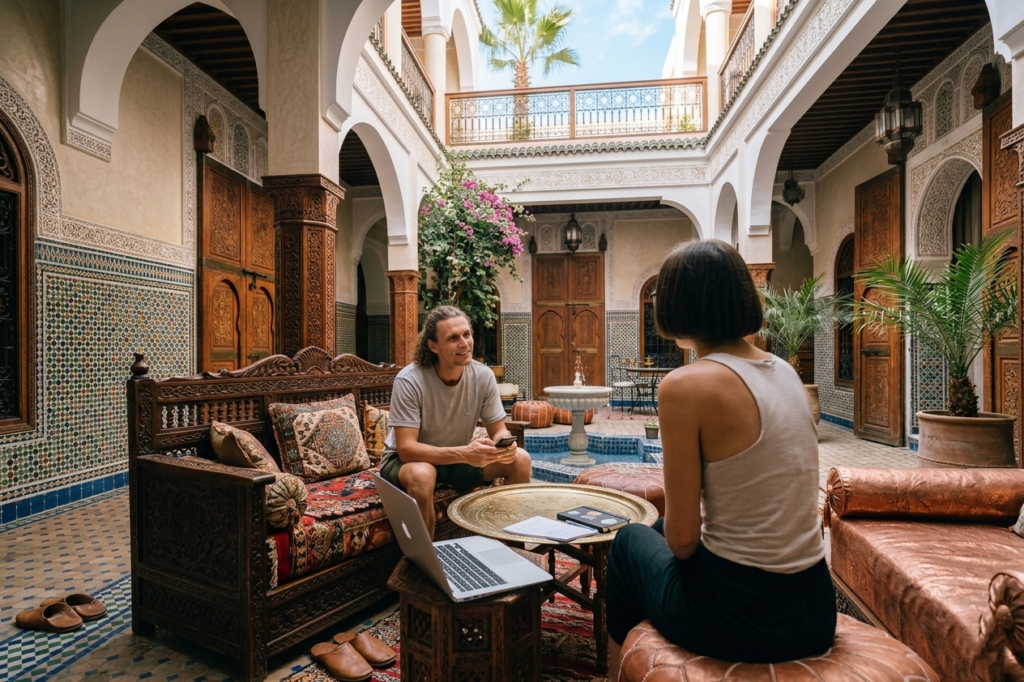
Marrakech is Morocco’s most popular city for digital nomads and for good reason. The Red City offers a thriving expat community, excellent coworking spaces, world-class riads-turned-offices, and an inspiring creative atmosphere. Working from a rooftop terrace overlooking the Koutoubia Mosque is an experience that no WeWork can match.
The city has excellent fiber internet infrastructure, dozens of cafés with reliable WiFi, and a growing number of modern coworking spaces that cater specifically to remote workers. Marrakech also has an international airport with direct flights to Europe, the US, and the Middle East — making it easy to travel for work when needed.
Marrakech — Digital Nomad Facts
- Average rent (1 bedroom): $300–$600/month in the medina; $500–$900 in Guéliz (modern district)
- Internet speed: 50–200 Mbps fiber widely available
- Coworking day pass: $8–$20/day
- Monthly coworking membership: $80–$180/month
- Cost of living: $900–$1,500/month (comfortable)
- Best area to stay: Guéliz (modern, easy WiFi) or medina (atmosphere)
- Airport: Marrakech Menara — direct flights to 80+ destinations
Best Coworking Spaces in Marrakech
- Cowo Marrakech — modern, fast internet, good community events
- Le Caravan — creative atmosphere, rooftop terrace
- WeWork-style spaces in Guéliz — professional, AC, meeting rooms
- Many riads — rent a riad with a team or solo for a unique workspace
💡 Insider Tip: Many cafés in Guéliz (the modern neighborhood) have excellent WiFi and are nomad-friendly. Café des Épices near Rahba Kedima square is a favorite for working with a view.
Casablanca — Best for Business & Infrastructure
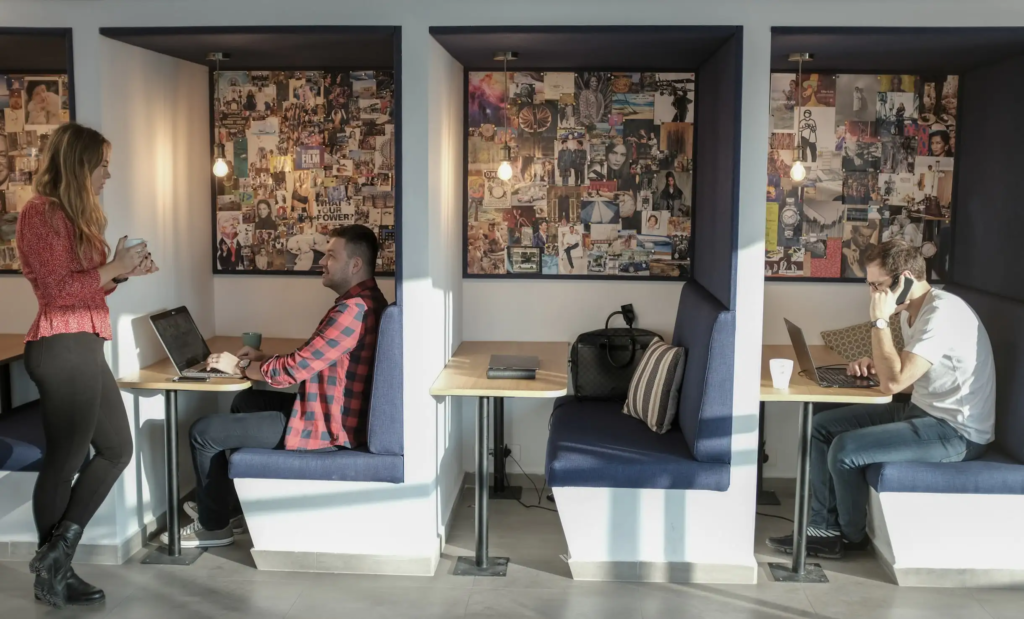
Casablanca is Morocco’s economic capital and the best choice for digital nomads who need a professional, business-oriented environment. The city has Morocco’s best infrastructure, fastest internet speeds, most international companies, and the largest selection of modern coworking spaces.
While it lacks the tourist charm of Marrakech or the beach vibes of Taghazout, Casablanca more than compensates with its efficiency, connectivity, and urban energy. The city’s Art Deco architecture, excellent restaurants, and vibrant nightlife make it a genuinely enjoyable place to live and work.
Casablanca — Digital Nomad Facts
- Average rent (1 bedroom): $400–$800/month
- Internet speed: 100–500 Mbps fiber (best in Morocco)
- Coworking day pass: $10–$25/day
- Monthly coworking membership: $100–$220/month
- Cost of living: $1,000–$1,800/month
- Best area to stay: Maarif, Gauthier, or Racine districts
- Airport: Mohammed V International — largest airport in Morocco
💡 Insider Tip: Casablanca’s tramway (T1 and T2 lines) makes getting around the city easy and cheap. Living near a tram stop saves significant time and taxi costs.
Taghazout — Best for Surf & Work Balance
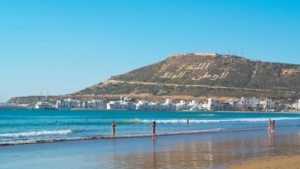
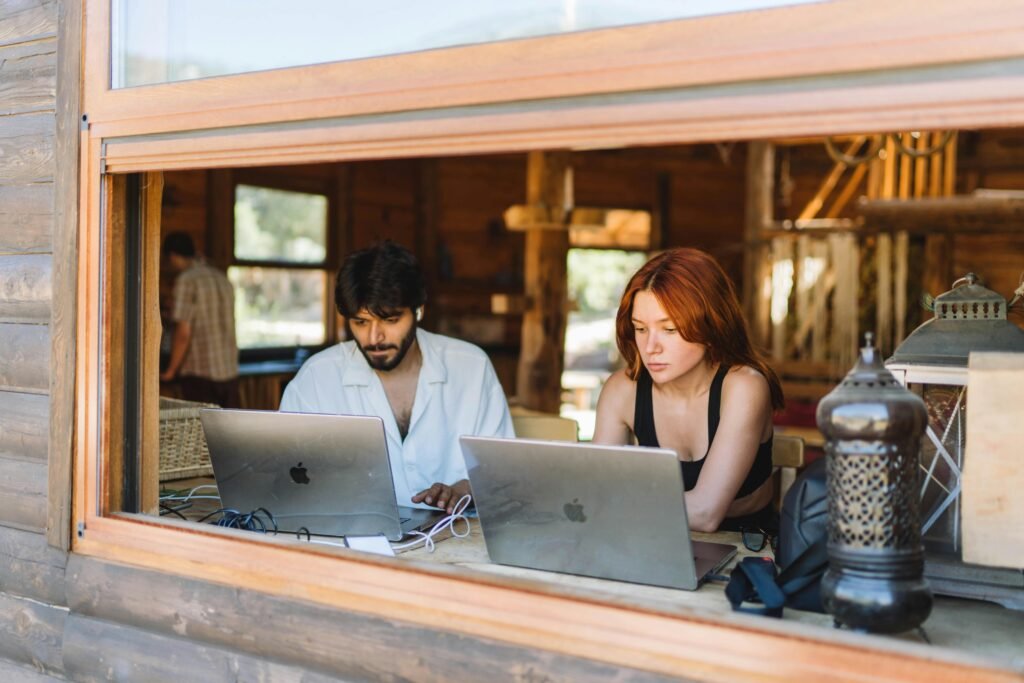
Taghazout, a small surf village 20km north of Agadir, has become Morocco’s most famous digital nomad hotspot. With world-class surf breaks right outside the door, a relaxed beach lifestyle, warm sunshine almost year-round, and a thriving international nomad community, Taghazout offers a working experience unlike anywhere else on earth.
The village has transformed significantly in recent years, with dedicated surf-and-work retreats, co-living spaces, and cafés with decent WiFi replacing what was once a purely traditional fishing village. It’s not the best choice for high-bandwidth professional work, but for creative freelancers, writers, designers, and those who value lifestyle over speed, Taghazout is paradise.
Taghazout — Digital Nomad Facts
- Average rent (1 bedroom): $200–$450/month
- Internet speed: 10–50 Mbps (improving but inconsistent)
- Coworking/coliving: Several surf-and-work retreats ($35–$95/day all-inclusive)
- Cost of living: $600–$1,200/month
- Best for: Freelancers, creatives, surfers, writers
- Nearest airport: Agadir Al Massira (30 min)
💡 Insider Tip: Book a stay at one of the dedicated surf-and-work retreats like Surf Maroc or Amouage for the best combination of reliable WiFi, community, and surf coaching.
Essaouira — Best for Creative & Slow Living
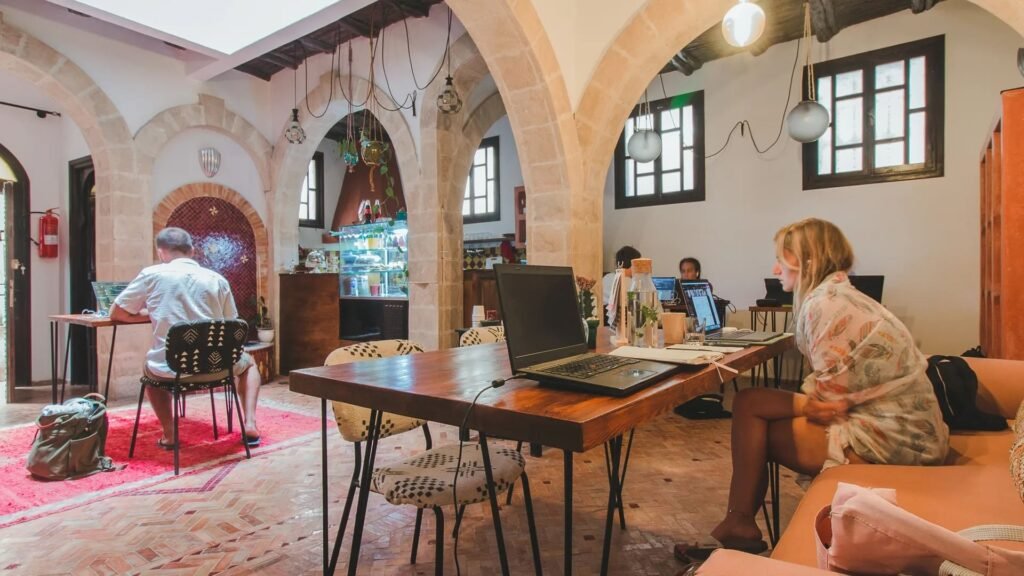
Essaouira is Morocco’s most bohemian city — a windswept UNESCO-listed coastal medina that has long attracted artists, musicians, writers, and free spirits. For digital nomads seeking a slower pace, deep creative inspiration, and a truly authentic Moroccan experience away from tourist crowds, Essaouira is the perfect base.
The city is smaller and quieter than Marrakech or Casablanca, which means fewer coworking options and slower internet in some areas. However, for those who don’t need cutting-edge speeds, the tradeoff is a magical lifestyle: fresh Atlantic seafood, blue-boat harbors, centuries-old ramparts, and a genuinely welcoming local community.
Essaouira — Digital Nomad Facts
- Average rent (1 bedroom): $150–$280/month
- Internet speed: 50–300 Mbps (fiber available in some areas)
- Cost of living: $600–$1,100/month (one of the cheapest)
- Best for: Writers, artists, photographers, slow travelers
- Nearest airport: Marrakech (2.5 hours) or Agadir (2.5 hours)
💡 Insider Tip: Essaouira is very windy — locals call it “the city of wind.” This makes it perfect for kitesurfing but bring a jacket even in summer!
Rabat — Best for a Quiet Professional Life
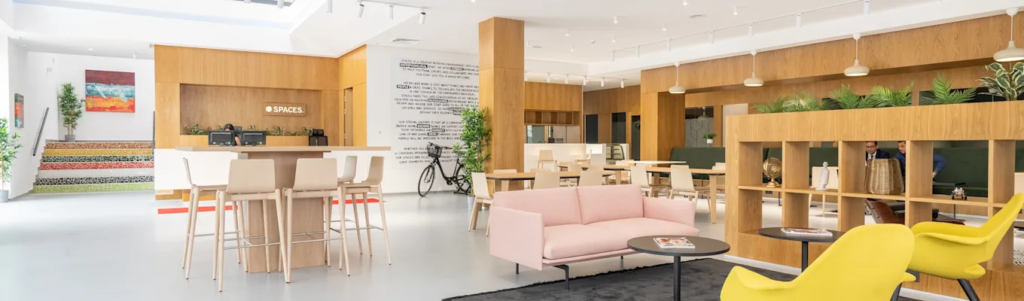
Rabat, Morocco’s capital city, is the country’s most underrated digital nomad destination. Cleaner, quieter, and more orderly than Casablanca or Marrakech, Rabat offers excellent infrastructure, a large student and expat population, reliable internet, and a relaxed pace of life that many nomads find ideal for focused deep work.
The city has a beautiful medina, a stunning Kasbah des Oudaias overlooking the Atlantic, and easy train connections to Casablanca (45 minutes) and Fes (3 hours). Living costs are slightly lower than Casablanca while infrastructure quality is comparable.
Rabat — Digital Nomad Facts
- Average rent (1 bedroom): $350–$650/month
- Internet speed: 50–200 Mbps fiber
- Cost of living: $900–$1,400/month
- Best for: Those seeking quiet, professional environment
- Nearest airport: Rabat-Salé Airport or Casablanca (1 hour by train)
Cost of Living in Morocco for Digital Nomads
One of the biggest advantages of choosing Morocco as a digital nomad base is the affordable cost of living compared to Europe or North America. Here’s a realistic monthly budget breakdown:
- Accommodation (1 bedroom apartment): $250–$700/month
- Coworking membership: $80–$200/month
- Food (eating out + groceries): $150–$350/month
- Transport (taxis + occasional train): $50–$100/month
- SIM card + mobile data: $10–$20/month
- Leisure (culture, sport, travel): $100–$250/month
- Total monthly budget: $640–$1,620/month
💡 Insider Tip: Buy a local SIM card from Maroc Telecom, Orange, or Inwi immediately on arrival. A 30-day unlimited data package costs around 100–150 MAD ($10–15) and works as a reliable backup when café WiFi lets you down.
Internet & Connectivity in Morocco
Internet quality in Morocco has improved dramatically in recent years. Here’s what to expect:
- Fiber internet: Available in most apartments in major cities — 100–500 Mbps
- 4G coverage: Excellent in cities; good in most tourist areas; patchy in rural regions
- Coworking spaces: Always have reliable, fast dedicated connections
- Cafés: WiFi quality varies — always test before settling in for a full workday
- Best providers: Maroc Telecom (best rural coverage), Orange (best city speeds), Inwi (best value data packages)
Practical Tips for Digital Nomads in Morocco
Banking & Money
- The Moroccan Dirham (MAD) is a closed currency — you cannot import or export it
- Use ATMs on arrival to withdraw cash — Visa and Mastercard work well
- Use Wise or Revolut cards to avoid foreign transaction fees
- Cash is still king in medinas, markets, and small cafés
Health & Safety
- Morocco is generally safe for digital nomads — petty crime is the main risk in crowded areas
- Private healthcare is good in major cities — get travel insurance before arrival
- Drink bottled water always
- Pharmacies are excellent and well-stocked throughout Morocco
Culture & Etiquette
- Morocco is a Muslim country — dress modestly in traditional areas
- Ramadan significantly changes working rhythms — cafés may be closed during the day
- Learn a few words of Darija (Moroccan Arabic) — locals deeply appreciate the effort
- Friday is the holy day — some businesses close for Friday prayers (midday)
Frequently Asked Questions — Digital Nomad Morocco
Is Morocco good for digital nomads?
Yes — Morocco is an excellent destination for digital nomads. It offers affordable living costs, improving internet infrastructure, a rich cultural experience, visa-free entry for most Western nationalities, and a prime location close to Europe. Marrakech and Casablanca are the top choices for most remote workers.
What is the best city in Morocco for remote work?
Marrakech is the most popular city for digital nomads in Morocco, thanks to its combination of culture, community, coworking spaces, and international airport. Casablanca is the best choice for those who prioritize professional infrastructure and fast internet. Taghazout is ideal for surf-lifestyle nomads.
How much does it cost to live in Morocco as a digital nomad?
A comfortable digital nomad lifestyle in Morocco costs between $700 and $1,500 per month, depending on the city and lifestyle. Taghazout and Essaouira are the most affordable options. Casablanca is the most expensive. All are significantly cheaper than equivalent European cities.
Does Morocco have a digital nomad visa?
As of 2026, Morocco does not have an official digital nomad visa. However, citizens of many countries (US, UK, EU, Canada, Australia) can enter visa-free for 90 days. Many nomads extend their stay through visa runs to Spain or by re-entering after a brief trip abroad.
Is internet reliable in Morocco for remote work?
Internet quality has improved significantly in Morocco. Fiber internet is widely available in major cities at speeds of 100–500 Mbps. Coworking spaces offer the most reliable connections. Rural areas and small villages may have slower or less consistent connectivity.
Final Thoughts: Is Morocco Right for You?
Morocco is one of the most exciting digital nomad destinations emerging in 2026. It’s not perfect — internet can be inconsistent outside major cities, and the lack of an official nomad visa means you need to plan your stay carefully. But for those who value culture, adventure, affordability, and a lifestyle that’s genuinely different from the European or North American norm, Morocco delivers in abundance.
Start with a month in Marrakech to get your bearings, explore Taghazout if you surf, and settle into Casablanca if you need serious business infrastructure. However you choose to work in Morocco, the experience will stay with you long after you’ve packed up your laptop and moved on.
Are you a digital nomad who has worked from Morocco? Share your experience and tips in the comments below!