Visiting Fes, Morocco is one of the most extraordinary travel experiences in the world. As the spiritual and cultural capital of Morocco, Fes is home to the world’s largest car-free medieval city, the oldest continuously operating university on Earth, and some of the most breathtaking Islamic architecture ever built. This complete Fes Morocco travel guide covers everything you need to know — top attractions, the medina, food, costs, and practical tips for your visit in 2026.
Often overlooked by travelers who rush to Marrakech, Fes rewards those who take the time to explore it with an experience that feels genuinely different from anywhere else on the planet. Walking through Fes el-Bali is like stepping 1,200 years into the past — and it is absolutely unmissable.
Table of Contents
Why Visit Fes, Morocco?
Fes Morocco is the country’s most historically significant city — and arguably its most fascinating. Here’s why Fes should be at the top of every Morocco itinerary:
- World’s largest medieval city: Fes el-Bali is a UNESCO World Heritage Site with over 9,000 streets and alleyways
- Oldest university on Earth: Al-Qarawiyyin University, founded in 859 AD, is recognized as the world’s oldest continuously operating university
- Authentic Morocco: Less touristy than Marrakech — Fes offers a more genuine, unfiltered Moroccan experience
- Extraordinary architecture: Stunning madrasas, mosques, fondouks, and palaces at every turn
- Living traditions: Artisans still practice ancient crafts — leather tanning, pottery, zellige tilework, and carpet weaving
- Rich food culture: Fes is considered Morocco’s culinary capital — famous for pastilla, harira, and mechoui
A Brief History of Fes, Morocco
Fes was founded in 789 AD by Moulay Idriss I on the banks of the Fes River, making it one of the oldest cities in Morocco. It quickly grew into the country’s most important political, religious, and intellectual center. Under the Marinid dynasty in the 13th and 14th centuries, Fes reached its golden age — the magnificent Bou Inania Madrasa, the Medersa el-Attarine, and dozens of other architectural masterpieces were built during this extraordinary period.
The city consists of three distinct parts: Fes el-Bali (the ancient medina, founded 789 AD), Fes el-Jdid (the “New Fes”, built in the 13th century, home to the Royal Palace), and the Ville Nouvelle (the French colonial new town built in the 20th century). Together, they tell the complete story of Fes across more than twelve centuries of continuous urban life.
Top 10 Things to Do in Fes, Morocco
1. Explore Fes el-Bali — The Ancient Medina
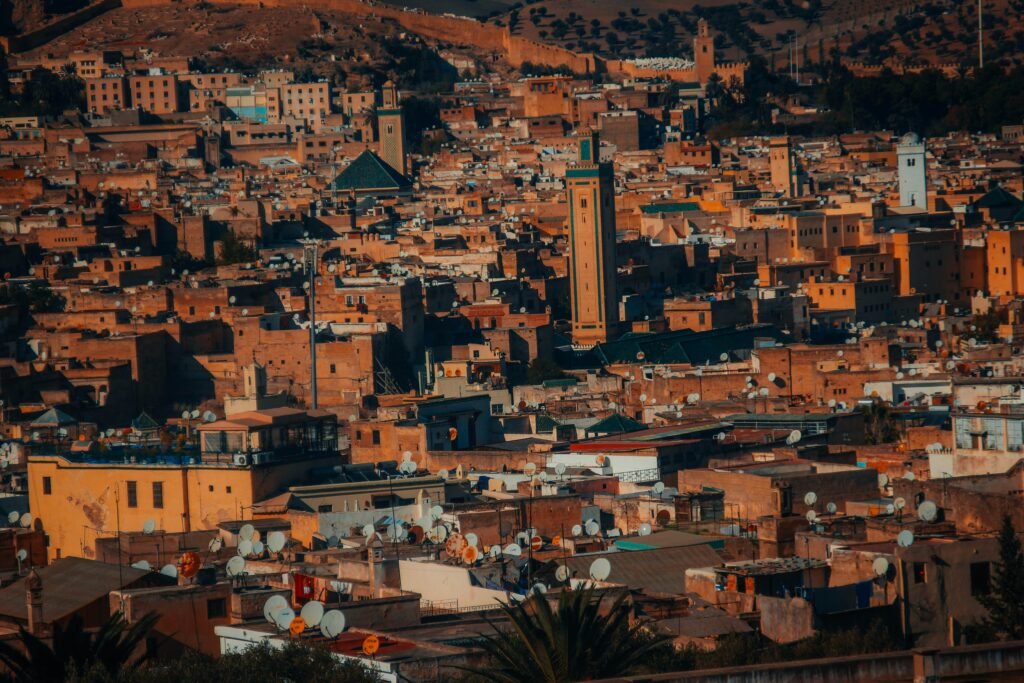
The heart of Fes Morocco is Fes el-Bali — a UNESCO-listed medieval city that is the largest car-free urban area in the world. With over 9,000 narrow alleyways, hundreds of mosques, ancient foundouks (caravanserais), and bustling souks, Fes el-Bali is a living museum unlike anything else on Earth.
Getting lost in the medina is both inevitable and delightful. Every corner reveals a new wonder: a craftsman beating copper in a dark workshop, the scent of cedar wood from a carpenter’s stall, a hidden madrasa courtyard of extraordinary beauty, or the sudden blast of a muezzin’s call drifting over terracotta rooftops.
💡 Insider Tip: Hire an official licensed guide for your first morning in the medina — it is genuinely confusing to navigate alone, and a good guide will unlock doors and stories you would never find on your own. Half-day guide rates are typically 200–350 MAD.
2. Visit the Chouara Tannery
The Chouara Tannery is one of the most iconic sights in all of Fes Morocco — and one of the most photographed images in the entire country. Operating since the 11th century using the same ancient methods, the tannery is a spectacular patchwork of stone vats filled with natural dyes: saffron yellow, poppy red, indigo blue, and chalk white.
The best views are from the rooftop terraces of the leather shops surrounding the tannery — entrance is free when you visit the shops, and there is no obligation to buy (though the quality of Fes leather goods is genuinely excellent).
💡 Insider Tip: Visit in the morning when workers are most active and the light is best for photography. The leather shops provide sprigs of fresh mint to mask the strong smell from the tanning chemicals — accept it gratefully!
3. Al-Qarawiyyin Mosque & University
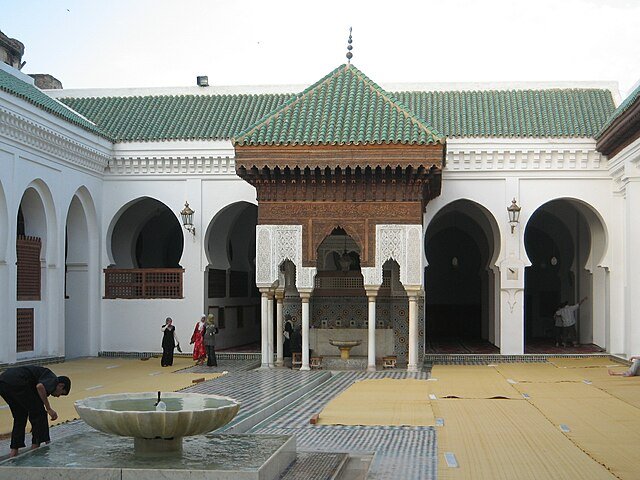
Founded in 859 AD by Fatima al-Fihri, the Al-Qarawiyyin is recognized by UNESCO and the Guinness World Records as the world’s oldest continuously operating university. It remains an active center of Islamic scholarship today, attracting students from across the Muslim world.
Non-Muslims cannot enter the mosque or university itself, but the exterior — visible from several points in the medina — is stunning, and the surrounding neighborhood is one of the most atmospheric in all of Fes.
4. Bou Inania Madrasa
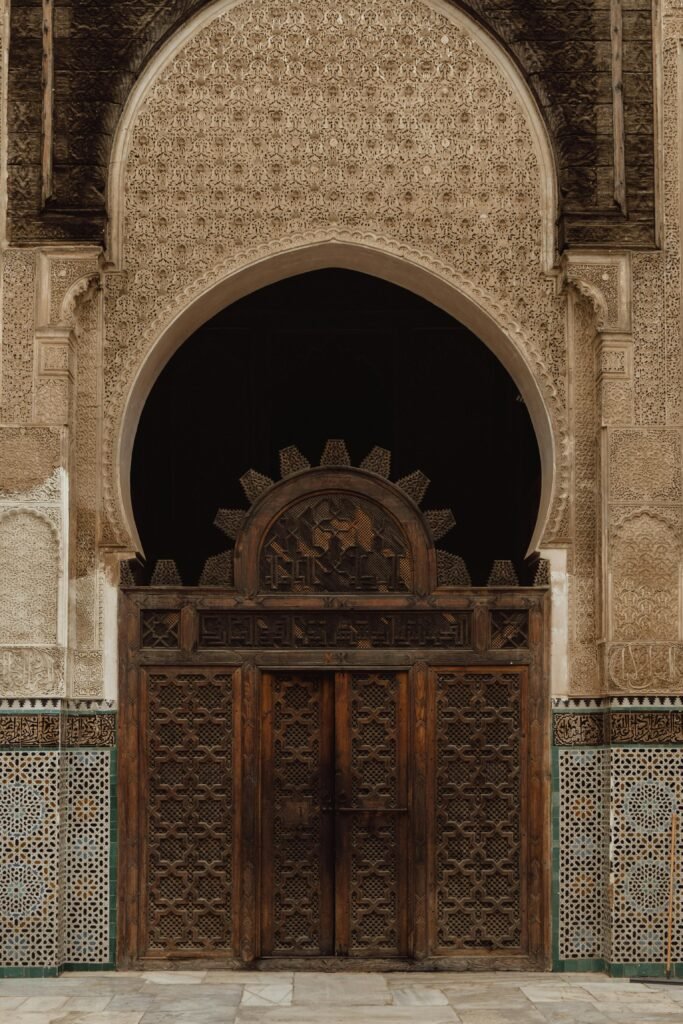
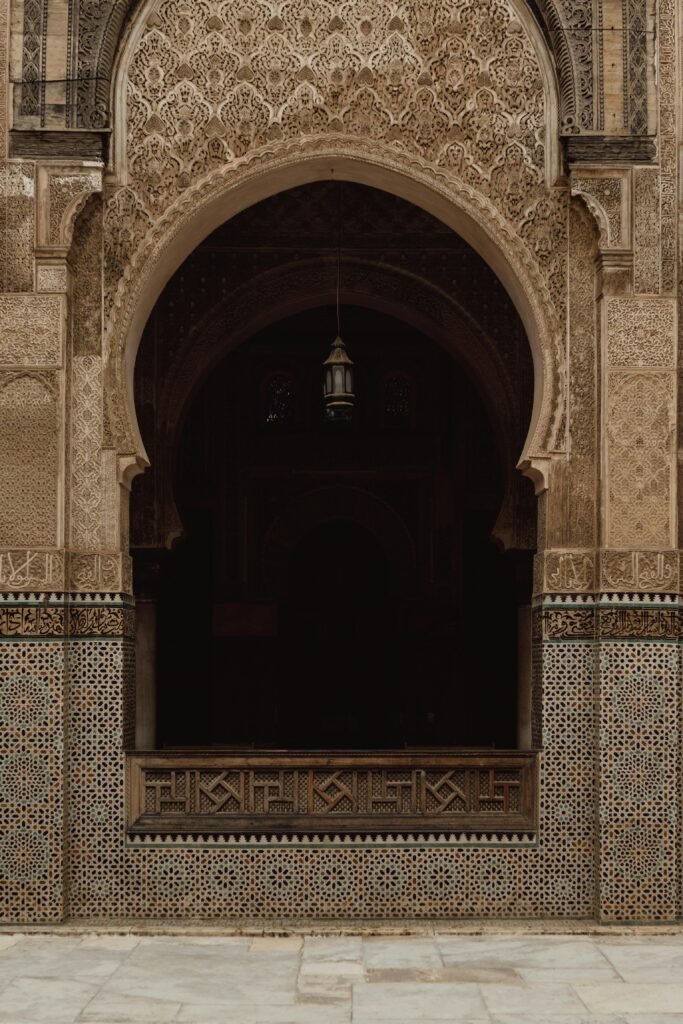
The Bou Inania Madrasa is the finest example of Marinid architecture in Morocco and one of the most beautiful buildings in the entire Islamic world. Built in the 14th century as a religious school and mosque, its interior is a masterpiece of craftsmanship: three layers of decoration ascend the walls — zellige tilework at the base, intricately carved plaster in the middle, and geometric carved cedar wood at the top.
Unlike the Al-Qarawiyyin, the Bou Inania is open to non-Muslim visitors — making it one of the must-see attractions in Fes Morocco.
- Opening hours: Daily 9:00 AM – 5:00 PM (closed during prayer times)
- Entry fee: 70 MAD (~$7)
5. Medersa el-Attarine
Adjacent to the Al-Qarawiyyin mosque, the Medersa el-Attarine (Madrasa of the Spice Sellers) is another stunning Marinid-era religious school. Its central courtyard — a perfectly proportioned space of zellige tiles, carved plaster, and cedar wood surrounding a central marble fountain — is one of the most serene and beautiful spaces in all of Morocco.
- Entry fee: 20 MAD (~$2)
- Best time to visit: Morning, when light fills the courtyard
6. The Royal Palace (Dar el-Makhzen)
The Royal Palace of Fes is one of the most photographed landmarks in the city, famous for its seven magnificent brass doors — each one a masterpiece of Moroccan craftsmanship decorated with geometric patterns, zellige tilework, and hand-carved cedar wood frames. The palace itself is closed to the public (it remains an active royal residence), but the exterior and the vast esplanade in front make for spectacular photography.
7. Fes el-Jdid & the Mellah
Fes el-Jdid (“New Fes”) was built in the 13th century as the new royal city alongside the ancient medina. It contains the Royal Palace, the Mellah (the historic Jewish quarter — one of the oldest in Morocco), and the beautiful Bou Jeloud Gardens. The Mellah is fascinating for its distinctive architecture — houses with balconies and large windows facing the street, unlike the inward-looking houses of Fes el-Bali.
8. Borj Nord & the View over Fes
For the best panoramic view over Fes Morocco, climb to the Borj Nord — a 16th-century fortress built by the Saadian dynasty on the hillside above the medina. The view from here, especially at sunset, reveals the extraordinary scale of Fes el-Bali: a vast terracotta ocean of rooftops, minarets, and domes stretching as far as the eye can see.
💡 Insider Tip: The road up to Borj Nord can be walked in about 20 minutes from Bab Bou Jeloud. Go at sunset for the most spectacular light over the medina.
9. The Souks of Fes
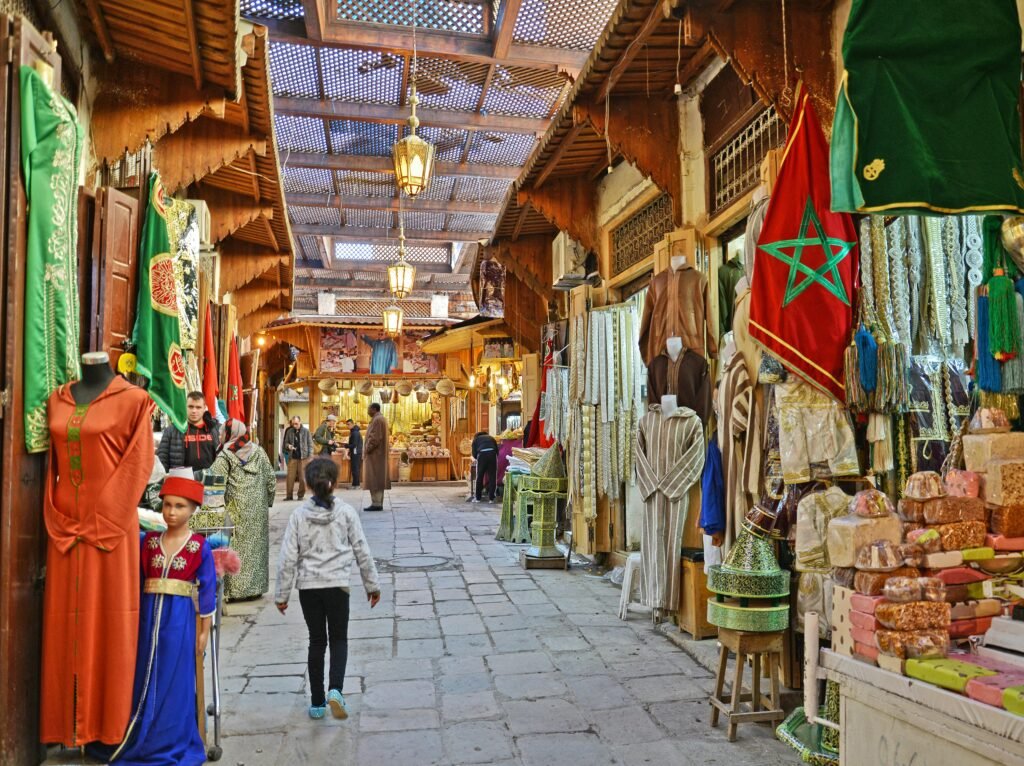
The souks of Fes are less touristy and more authentic than those of Marrakech — making them a better destination for serious shopping and cultural immersion. The souks are organized by trade, each neighborhood specializing in a different craft: the Souk el-Henna (henna and herbal remedies), Souk des Teinturiers (dyers), Souk el-Attarine (spices and perfumes), and the copper and brass souk.
Prices are generally lower than Marrakech, and the quality — particularly for leather goods, pottery, and carpets — is among the best in Morocco.
10. Jardin Jnan Sbil (Bou Jeloud Gardens)
A beautiful 19th-century royal garden located between Fes el-Bali and Fes el-Jdid, Jardin Jnan Sbil is a peaceful oasis of orange trees, fountains, and palm-lined walkways. It’s the perfect place to rest after a long morning in the medina — and entry is completely free.
What to Eat in Fes Morocco
Fes is widely considered Morocco’s culinary capital. Here are the must-try dishes and where to find them:
- Pastilla (Basteeya): Fes’s most famous dish — a flaky warqa pastry filled with pigeon (or chicken), almonds, and cinnamon, dusted with sugar and cinnamon. Sweet, savory, and utterly unique
- Harira: Morocco’s national soup — a hearty tomato, lentil, and chickpea broth, especially popular during Ramadan and in cooler months
- Mechoui: Slow-roasted whole lamb, incredibly tender and fragrant with spices
- Mrouzia: A Fassi specialty — slow-cooked lamb with honey, almonds, and ras el hanout spice blend
- Kaab el Ghzal: “Gazelle’s horn” — crescent-shaped pastries filled with almond paste and orange blossom, the classic Fes sweet
- Mint tea: The universal Moroccan welcome — sweet, strong, and poured from a great height for a perfect froth
💡 Insider Tip: For the best pastilla in Fes, head to Restaurant Dar Hatim or Café Clock — both are beloved institutions in the medina that serve authentic Fassi cuisine at reasonable prices.
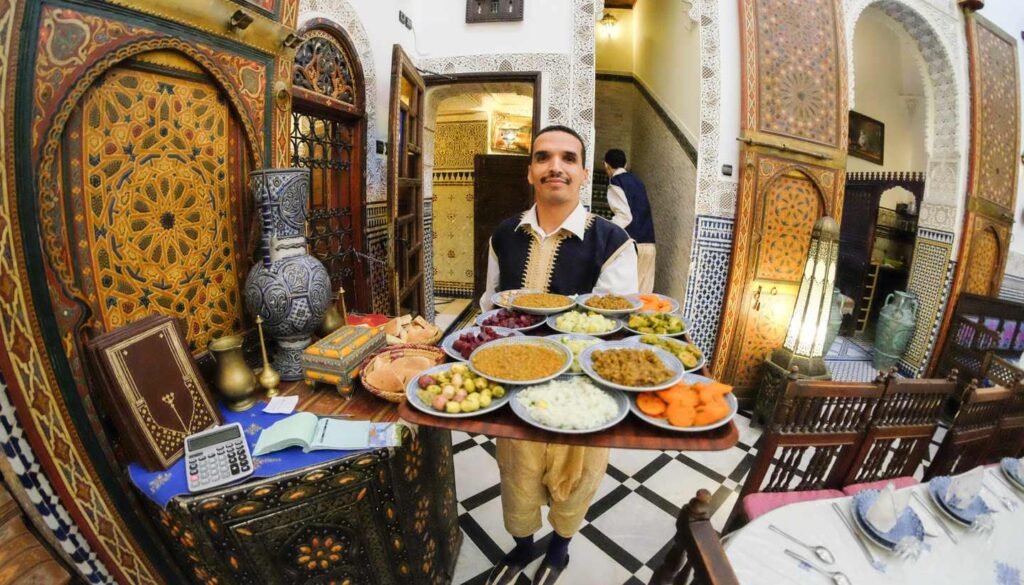
Where to Stay in Fes Morocco
The best place to stay in Fes Morocco is inside the medina in a traditional riad — a Moroccan guesthouse built around a central courtyard. Staying in a riad puts you at the heart of the action, allows you to experience authentic Fassi hospitality, and gives you the magical experience of waking up inside one of the world’s great medieval cities.
Best Areas to Stay in Fes
- Fes el-Bali (medina): Best for atmosphere and authenticity — stay in a riad for the complete experience. Budget: $40–$200/night
- Fes el-Jdid: Quieter, close to the Royal Palace and gardens. Good mid-range option. Budget: $30–$100/night
- Ville Nouvelle: Modern district with international hotels. Best for those who prefer Western-style comfort. Budget: $50–$150/night
💡 Insider Tip: Book your riad well in advance — the best riads in Fes el-Bali fill up quickly, especially during peak season (March–May and September–November).
Practical Information for Visiting Fes Morocco
How to Get to Fes
- By plane: Fes-Saïs Airport has direct flights from many European cities (Ryanair, easyJet, Royal Air Maroc)
- By train: Excellent train connections from Casablanca (3.5 hours), Rabat (3 hours), and Marrakech (7 hours via Casablanca)
- By bus: CTM and Supratours buses from all major Moroccan cities
- By car: Well-connected by motorway — 3.5 hours from Casablanca, 4.5 hours from Marrakech
How Many Days Do You Need in Fes?
- Minimum: 2 days — enough for the main medina highlights
- Recommended: 3 days — allows a relaxed exploration of Fes el-Bali, Fes el-Jdid, and a day trip
- Ideal: 4–5 days — for a deep dive into the city’s culture, souks, food, and day trips to Volubilis or Meknes
Cost of Visiting Fes Morocco
- Budget traveler: $40–$70/day (hostel, street food, public transport)
- Mid-range: $80–$150/day (riad, restaurant meals, guided tours)
- Luxury: $200+/day (luxury riad, private guide, fine dining)
- Entry fees: Bou Inania Madrasa 70 MAD; Medersa el-Attarine 20 MAD; Borj Nord 10 MAD
- Licensed guide (half day): 200–350 MAD
Best Day Trips from Fes Morocco
- Meknes (1 hour): Another imperial city with an extraordinary medina, the massive Bab Mansour gate, and the Mausoleum of Moulay Ismail
- Volubilis (1.5 hours): Morocco’s best-preserved Roman ruins — a UNESCO World Heritage Site with spectacular mosaics and columns
- Chefchaouen (3.5 hours): The famous blue city in the Rif Mountains — a magical contrast to the earthy tones of Fes
- Ifrane (1 hour): Morocco’s “Little Switzerland” — a charming European-style town with a famous cedar forest and wild Barbary macaques
Frequently Asked Questions About Fes Morocco
Is Fes worth visiting in Morocco?
Absolutely — Fes is one of the most extraordinary cities in the world. Its ancient medina, world-class Islamic architecture, living artisan traditions, and authentic Moroccan culture make it an unmissable destination. Many travelers who visit both Marrakech and Fes find Fes to be the more profound and memorable experience.
How many days do you need in Fes Morocco?
Three days is the ideal length for a first visit to Fes. Day 1 for Fes el-Bali with a guide, Day 2 for independent exploration and the souks, and Day 3 for Fes el-Jdid, the Royal Palace, and the view from Borj Nord. Add a 4th day for a day trip to Meknes and Volubilis.
Is Fes safe for tourists?
Yes — Fes is generally safe for tourists. The main concern is getting lost in the medina (which is normal and part of the experience) and avoiding informal street guides who may lead you to shops for commission. Always hire official licensed guides with an identification badge.
What is Fes Morocco famous for?
Fes is famous for its ancient medina (the world’s largest car-free urban area), the Al-Qarawiyyin — the world’s oldest university, the Chouara Tannery, its extraordinary Islamic architecture, and its rich culinary traditions. It is widely considered Morocco’s most culturally and historically significant city.
What is the best time to visit Fes Morocco?
The best time to visit Fes is spring (March to May) and autumn (September to November), when temperatures are mild and pleasant. Summer (June–August) can be very hot (35–40°C), while winter is cool but generally fine for sightseeing. Avoid visiting during major religious holidays when some attractions may have limited hours.
Final Thoughts: Why Fes Morocco Must Be on Your Itinerary
Fes Morocco is a city that defies easy description. It is simultaneously the past and the present — a living medieval city where 1,200 years of history breathe through every alleyway, every minaret, every craftsman’s workshop. No photograph, no travel article, and no recommendation can fully prepare you for the experience of entering Fes el-Bali for the first time.
Come with time, come with curiosity, and come with an appetite — for the architecture, the culture, the food, and the profound sense of human history that permeates every corner of this extraordinary city. Fes will reward you more generously than almost anywhere else in Morocco.
Have you visited Fes Morocco? Share your favorite memory or tip in the comments below!